Publication: IT Voice / Link: https://reurl.cc/zOOddp
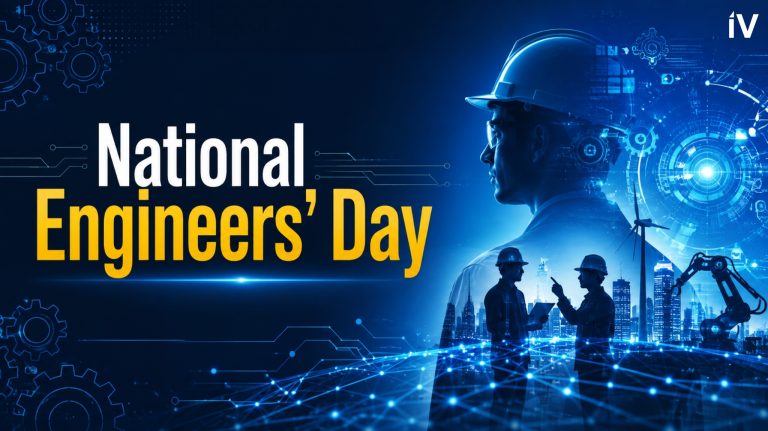
On National Engineers’ Day, technology and business leaders reflect on how engineering is shaping India’s next phase of growth. From AI and digital infrastructure to sustainability, cybersecurity and technological sovereignty, their perspectives highlight the evolving role of engineers in building smarter, more resilient and responsible systems for the future.
Vishal Sirohi, Co-Founder and CEO, Island Computing
“Indian engineers have built and operated the world’s largest cloud platforms from inside AWS, Microsoft, and Google. India has shipped at the application layer for two decades. Those engineers are now building the layer beneath it here: the distributed control and data plane, the identity substrate, and the orchestration that turns racks and GPUs into a product a builder consumes. Island Computing runs that platform, fault-tolerant across data centres, engineered from the first commit for multi-tenant SaaS, long-running agentic execution, and regulated AI on Indian data. An Island is up in 90 seconds. A production-grade, fault-resistant application deploys in three minutes.
India’s cloud spend is US$26.4 billion in 2026. Approximately 80% of it flows to foreign operators. The DPDP Act, RBI localisation, SEBI advisories, CERT-In’s six-hour incident-reporting directive, and the MeitY addendum of 20 March 2026 have moved infrastructure decisions from procurement to design. Sovereignty compounds only when the operator owns the code, the underlying hardware infrastructure, the control and data plane, the identity systems, the audit log, and the delivery of the platform, inside Indian jurisdiction. Sir M. Visvesvaraya’s generation built the dams, waterworks, and railways the economy ran on. This generation is building the substrate it computes on.”
Sudhir Goel, Chief Business Officer, Acer India
“National Engineers’ Day is a celebration of the minds and ideas that have consistently transformed challenges into opportunities and possibilities into progress. As India moves towards an AI-led and digitally driven future, the role of engineers has become more critical than ever. They are shaping technologies that are transforming industries, businesses, and everyday experiences. From AI and intelligent computing to sustainable innovation, engineering is helping address some of the most complex challenges of our time. At Acer India, we believe engineering excellence is fundamental to creating meaningful and responsible technology. With India’s strong engineering talent and thriving technology ecosystem, the country is well positioned to shape the next wave of global innovation.”
Simon Rizkalla, Vice President Customer Advocacy APJ, New Relic
“Sustainability deserves to be as central to engineering conversations as innovation is. At New Relic, we’ve long believed operational excellence and sustainability should go hand in hand, which is why our engineering team practices GreenOps. Through this approach, our team optimises infrastructure efficiency to maximize performance, while reducing the environmental footprint of our workloads.
We committed to this early. In 2023, New Relic set a formal goal to reach net-zero emissions by 2030, backed by targets approved by the Science Based Targets initiative. One of the first places we looked was our own cloud footprint, since infrastructure made up nearly half our total emissions at the time. We migrated our largest workloads from on-premises data centers onto AWS Graviton-based instances, cutting emissions from those migrated workloads by 37%.
The next frontier, for us and for engineering teams everywhere, is doing the same for AI. As AI becomes inseparable from how Indian engineering teams build software, using compute mindfully is becoming an engineering responsibility––intelligent observability is helping us achieve that. For example, an AI agent might take 15 model calls to complete a task that could have been done in four. Without observability, that looks like ordinary “AI usage.” However, with intelligent observability, teams can trace exactly where the extra calls are happening, understand why, and redesign the workflow, cutting cost and compute at the same time. These small steps are what lead to big, sustainable strides.
Abhilash Shetty, Vice President & Head of Engineering & AI, Visionet
“Building AI responsibly and sustainably are one in the same. On a day meant to celebrate what engineers build, it’s worth remembering how efficiently they build it, too.“
Engineering is a mindset, one driven by curiosity, a willingness to challenge convention, and a relentless pursuit of better ways to solve problems. As AI and emerging technologies reshape how we build new age systems, transform business processes, and create value, the role of engineers continues to evolve. Yet, what remains timeless is the ability to think critically, adapt, solve complex problems, and turn ideas into meaningful outcomes. With AI democratizing knowledge and expertise, the engineer’s role is evolving: from finding answers to framing better questions, challenging convention, and turning insight into impact.
This Engineers’ Day, we at Visionet celebrate the engineers shaping our AI-Native journey, turning complexity into opportunity, challenges into possibilities, and ideas into impact.”
Praveer Kochhar, Co-Founder & CPO, KOGO AI
“National Engineer Day for me is about the realities nobody sees until it breaks. This year’s theme: smart engineering for a sustainable future through innovation and digitalization, is a call to build systems that scale without multiplying waste, whether that’s compute, tooling or human effort.
At KOGO AI, this shows up as a design constraint because every enterprise we work with is running 10 or more disconnected AI tools by the time they call us. This means separate systems for retrieval, evaluation, observability and governance and each of them has its own infrastructure footprint. Consolidating that into one operating layer is cleaner engineering because it cuts redundant compute, integration work and risk. When people think of sustainability in AI they immediately think of the carbon footprint and that matters but it is also about not rebuilding the same governance and audit logic five times for five different agents.
In addition, digitalization means nothing without ownership. An enterprise that digitizes its workflows with AI agents but is outsourcing its process IP to the third party is only renting their own assets. Good engineering means giving organizations the control plane to own that IP on-prem with an audit trail to prove when regulators come knocking on the door.
It’s obviously not glamorous work because it involves RBAC tables, drift monitoring, connector maintenance and more. But that’s what smart engineering for a sustainable future looks like in practice—fewer moving parts, less duplicated infrastructure and AI systems that get more capable over time. On that note, Happy National Engineers Day to everyone doing that essential work.”
Subhash Kalluri, Founder, FreJun
“Ideas are easy. Engineering is what turns an ambitious idea into something that can work reliably in the real world. On Engineer’s Day, I want to recognise the true builders who built the world’s infrastructure that the rest of us simply take for granted. They are the invisible giants, and the world moves on their shoulders without ever turning around to look. That is the mark of the craft. Done well, the work disappears into everyday life, and the day runs smoothly because someone thought hard about everything that could have gone wrong.
At FreJun, our engineering team has built voice infrastructure that businesses across multiple countries rely on daily, solving hard problems without asking for the spotlight. We see it in voice infrastructure today, where engineers are making AI agents dependable enough for everyday business use, which is what innovation really means: making complex systems simpler and more reliable at scale. To them, and to engineers everywhere, thank you. Today is yours.”
Sanjay Agrawal, Head Presales and CTO, Hitachi Vantara India and SAARC
“As India accelerates its digital transformation, engineering excellence will increasingly be defined by the strength, intelligence and sustainability of the systems we build. AI, automation, and data-driven innovation are opening new possibilities and shaping the infrastructure required to support India’s digital future. This places engineers at the centre of how data is managed, systems are secured and technology evolves efficiently at scale.
Technological sovereignty is strengthened through the capability to build, secure and sustain advanced technologies with confidence and responsibility. This calls for a new generation of engineers who bring together deep technical expertise with cyber resilience awareness, energy efficiency and ethical innovation. Their ability to create intelligent, trusted and resilient systems will play an important role in shaping a technologically advanced and sustainable India.”
Sanket Deodhar, India Head, Anaplan
“Engineering excellence today is increasingly about designing systems that can adapt to change rather than simply perform under predictable conditions. As organisations navigate interconnected economic, operational, and technological challenges, engineers have a critical role in building intelligent systems that bring together data, human judgement, and AI to support faster, better-informed decisions.
AI will expand what these systems can do, but its true value will depend on trusted data, strong design and the ability to apply innovation responsibly. For India, strengthening its technological capabilities will increasingly depend on developing the talent and expertise to design and govern intelligent systems that are transparent, adaptable and resilient. The engineers of the future will therefore need to think beyond individual technologies and understand how data, AI and business decisions connect across the enterprise, helping organisations model change, evaluate different scenarios and respond with greater confidence.”
Sunil Sharma, Managing Director & VP – Sales (India & SAARC), Sophos
“National Technology Day is a reminder that India’s digital progress is not just defined by how fast we innovate, but by how securely we scale that innovation. As enterprises accelerate their AI and digital transformation journeys, cybersecurity must be treated as foundational infrastructure- enabling trust, resilience and long-term growth. In an AI-first, hyper-connected world, the threat landscape is evolving rapidly. From deepfakes to automated attacks and AI-driven vulnerability discovery, attackers are operating at unprecedented speed and scale. This requires organisations to move beyond reactive security models and adopt continuous, real-time threat detection and response frameworks. At the same time, identity has emerged as the new perimeter. Securing access, validating trust and ensuring visibility across systems is now critical to enterprise security. The shift we are seeing is from compliance-led approaches to resilience-led strategies—where organisations are not just prepared to defend, but to adapt and recover in real time. As India continues to lead in digital adoption, building secure, resilient and responsible technology ecosystems will be key to sustaining that momentum.”
AS Prasad, VP, Product Management, Vertiv
“India crossed a technological threshold in 1998 that quietly changed the trajectory of a nation. Twenty-seven years on, the ambition has scaled, but so has the stakes. The next decade of AI will be won in the infrastructure layer, in the power systems, the cooling architecture, and the data center design decisions being made right now. Vertiv believes in building the critical infrastructure that ensures India’s AI workloads run at the speed and scale the country’s growth demands. National Technology Day is not just a commemoration. It is a checkpoint. And the only question worth asking is whether we are engineering boldly enough for what is coming.”
Srinivas Shekar, CEO and Co-founder, Pantherun Technologies
“India handled more than 29.4 lakh cybersecurity incidents in 2025, while AI is now giving attackers the ability to automate reconnaissance, analyse code and chain together multi-stage attacks at a speed that previously required teams of skilled experts. At the same time, India has a serious engineering capacity problem: 78% of organisations report high demand for AI security engineers, while nearly a third struggle to recruit specialists in advanced cryptography and post-quantum security.
For engineers building connected systems, the challenge is therefore moving beyond securing the perimeter to designing security into the architecture itself. Encryption needs to evolve with the threat, particularly across critical infrastructure, defence, transportation and industrial networks where a compromised connection can have physical consequences. This Engineer’s Day, the engineering challenge before us is clear: build networks where security is inherent to how data moves, rather than another layer added after deployment.”
Vinod Narapa Reddy, Founder & CEO,CRMIT Solutions
“Indian enterprises do not have a shortage of data. The bigger challenge is turning the data they already have into intelligence they can actually use. Data and analytics leaders in India estimate that 26% of their organisational data is siloed, inaccessible, or otherwise unusable, and 75% believe some of their most valuable business insights are trapped within this inaccessible data.
This is an engineering problem as much as a business one. Before an AI agent can recommend the next best action for a customer, identify an opportunity, or support a business decision, it needs access to accurate, connected, and contextual data across CRM, ERP, and other enterprise systems. Engineers today are therefore solving for much more than applications and infrastructure. They are building the data foundations that allow information sitting across an organisation to become useful intelligence at the point of decision. On Engineer’s Day, this is an important shift to recognise: the value of AI will ultimately be determined by how well we engineer the journey from fragmented data to informed decisions.
About Pantherun:
Pantherun is a cyber security innovator with a patent pending approach to data protection, that transforms security by making encryption possible in real-time, while making breach of security 10X harder compared to existing global solutions, at better performance and price.