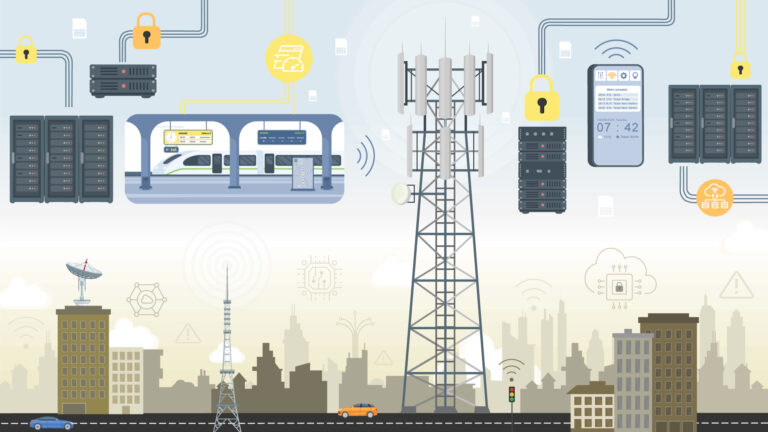
In today’s rapidly evolving telecommunications landscape, innovation is constant—but not all systems have kept pace. Across operators and MVNOs worldwide, a surprising number of critical platforms still rely on aging infrastructure that has never been fully modernized. These legacy systems, while often stable, can quietly erode efficiency, limit flexibility, and inflate operational costs.
The question is no longer if these systems should be renewed—but how quickly and effectively that transformation can happen.
The Hidden Cost of Legacy Systems
Many telecom operators continue to depend on platforms deployed years—sometimes decades—ago. These systems were built for a different era: lower data consumption, simpler roaming agreements, and limited service diversity.
Over time, several issues emerge:
-
- Operational inefficiencies due to outdated architectures
- High maintenance costs driven by obsolete hardware and scarce expertise
- Limited scalability in the face of growing subscriber and data demands
- Reduced competitiveness due to lack of agility and innovation
One prominent example is the Steering of Roaming (SOR) platform.
SOR Platforms: A Case in Point
SOR systems are essential for managing how subscribers connect to partner networks while roaming. However, many existing SOR implementations are:
-
- Built on legacy rule engines
- Difficult to update or optimize dynamically
- Poorly integrated with modern analytics and policy control systems
As roaming dynamics evolve—especially with 4G, 5G, and IoT—these outdated platforms can significantly impact both user experience and revenue optimization.
Beyond SOR: A Broader Challenge
SOR is just one example. Other legacy systems facing similar challenges include:
-
- OTA (Over-The-Air) management platforms
- SIM provisioning and lifecycle management systems
- Policy control and charging platforms
- Legacy messaging or signaling systems
These platforms often operate in silos, lack automation, and are not designed for today’s digital ecosystem.
SunTiS: Enabling Fast and Efficient Modernization
SunTiS provides a powerful approach to transforming these legacy environments without the typical complexity and risk associated with telecom upgrades.
Rather than requiring lengthy and disruptive overhauls, SunTiS solutions are designed to:
-
- Seamlessly replace or integrate with existing systems
- Accelerate deployment timelines, minimizing operational disruption
- Leverage modern, flexible architectures (cloud-ready, API-driven)
- Enhance performance and control through advanced analytics and automation
Rapid Return on Investment
One of the key advantages of working with SunTiS is the ability to achieve a rapid return on investment (ROI).
This is driven by:
-
- Reduced operational costs through automation and simplification
- Improved revenue opportunities, especially in roaming optimization
- Lower maintenance overhead by eliminating legacy dependencies
- Faster time-to-market for new services and features
In many cases, operators can begin realizing tangible benefits within months—not years.
Future-Proofing Telecom Operations
Modernizing legacy systems is not just about solving today’s inefficiencies—it’s about preparing for the future. With the continued expansion of 5G, eSIM/iSIM technologies, and IoT ecosystems, telecom operators need platforms that are:
-
- Agile
- Scalable
- Interoperable
- Ready for continuous evolution
SunTiS empowers operators to take this step confidently, transforming outdated infrastructure into a strategic advantage.
Legacy telecom systems have served the industry well—but their time is coming to an end. Continuing to rely on them carries increasing costs and risks.
By modernizing platforms such as SOR and other critical systems, operators can unlock significant value. With SunTiS, this transformation becomes not only achievable, but fast, efficient, and financially compelling.
Now is the time to turn legacy constraints into opportunities for growth.
About Pantherun:
Pantherun is a cyber security innovator with a patent pending approach to data protection, that transforms security by making encryption possible in real-time, while making breach of security 10X harder compared to existing global solutions, at better performance and price.